
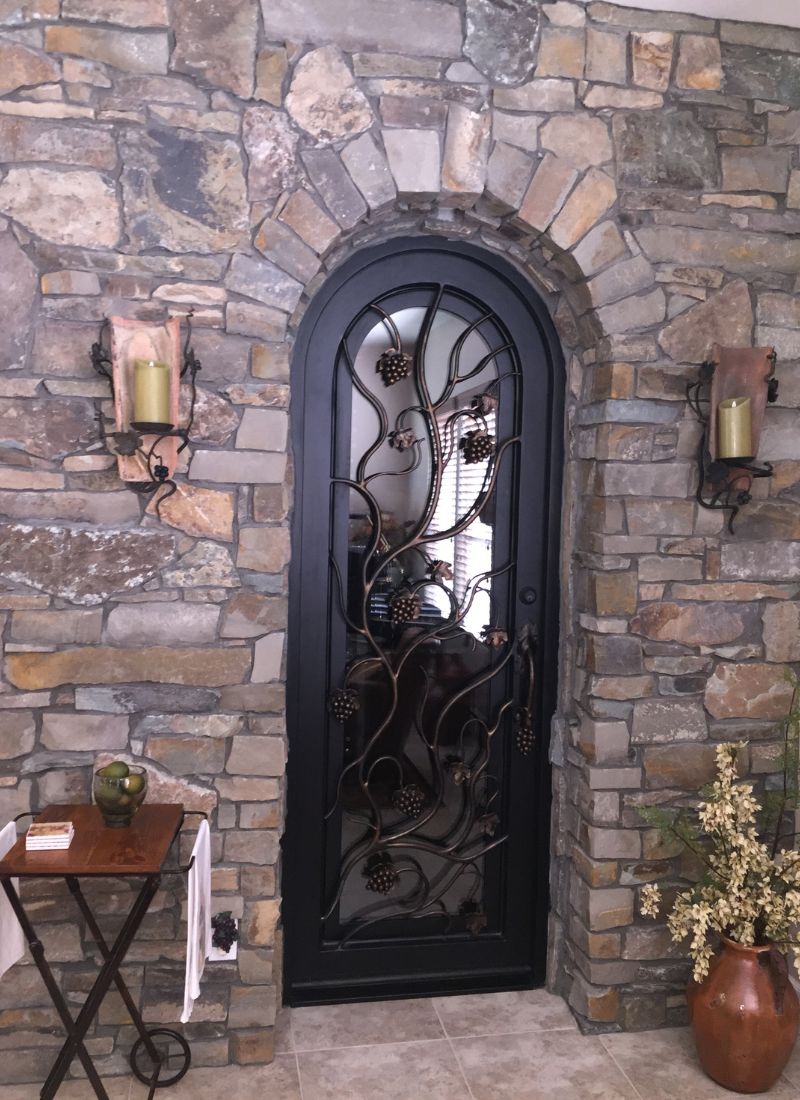
A custom wine cellar should look exceptional when it is first completed, but its true quality becomes clearer over time. The materials must continue performing in a cool, climate-controlled environment while developing the character that makes the room feel established rather than dated.
Choosing wine cellar materials is not only an aesthetic decision. Wood movement, moisture resistance, temperature stability, maintenance, installation methods, and compatibility with the cooling system all affect how well the cellar ages.
The right combination of wood, stone, metal, glass, flooring, and architectural finishes can create a room that feels connected to the property while protecting the collection stored inside it.
Here are the most important factors to consider when selecting materials for a custom wine cellar.
Begin With the Environment, Not the Appearance
Wine cellars operate differently from standard living spaces. They are typically maintained at cooler temperatures with controlled humidity. Because the cellar and the surrounding property may have significantly different conditions, materials can react differently than they would elsewhere in the home.
Some products may expand, contract, warp, separate, or develop moisture problems when they are not appropriate for the environment. Adhesives, finishes, sealants, substrates, and installation methods must also be suitable for the room’s conditions.
Before selecting colors and textures, confirm that each material can perform reliably inside a conditioned wine cellar. The strongest designs begin with technically appropriate materials and then refine them into a cohesive visual palette.
Design principle: Choose every material for performance first, then shape those materials into the atmosphere you want the cellar to create.
Choose Wood for Stability as Well as Character
Wood remains one of the most popular wine cellar materials because it brings warmth, craftsmanship, and natural variation into the room. It can be used for bottle racking, display shelves, cabinetry, doors, ceilings, wall treatments, and architectural details.
However, not every wood species performs or appears the same. Grain pattern, density, natural color, resistance to movement, finishing requirements, and availability should all influence the selection.
Redwood and mahogany have traditionally been used for wine cellar racking because of their durability and dimensional stability. Other hardwoods can also be appropriate when they are properly selected, prepared, finished, and installed.
For a modern cellar, a dark-stained hardwood or clean natural finish may create a restrained architectural appearance. A traditional or old-world cellar may use richer tones, heavier profiles, carved details, or hand-applied finishes to develop a sense of permanence.
The wood should complement the property rather than making the cellar feel like a separate themed room. Reviewing the flooring, cabinetry, doors, trim, and furniture outside the cellar can help create a more connected design.
Consider How the Wood Will Be Finished
A finish can change the color, texture, depth, and durability of wood. Stains may highlight or soften the grain, while clear finishes can protect the surface and preserve its natural appearance.
The selected finish should be appropriate for a climate-controlled interior and fully cured before the collection is placed in the room. Strong odors and ongoing off-gassing are undesirable around wine storage.
Finish samples should be viewed inside the actual space whenever possible. The same stain can appear warmer, cooler, darker, or more reflective depending on the lighting, surrounding stone, wall color, and metal finishes.
A sample should also show the actual wood species and preparation method. Applying the same stain to two different woods can produce noticeably different results.
Use Metal to Create Structure and Visual Lightness
Metal racking is often selected for modern wine cellars, glass enclosures, and wine walls. Its narrow profiles can make bottles appear to float while keeping labels visible and allowing light to move through the display.
Metal can also be combined with wood cabinetry, stone walls, or plaster finishes to balance contemporary precision with warmth and texture.
Common metal applications include bottle supports, framing, ladders, railings, cabinet hardware, doors, shelving details, and lighting channels. The finish may be matte black, bronze, brass, stainless steel, or a custom powder-coated color.
Durability depends on both the base metal and the finish. High-touch components should resist scratching, corrosion, and visible wear. Hardware and fasteners should also be coordinated so they do not visually conflict with the primary metal finish.
When different metals are used together, the combination should feel intentional. Repeating a finish in lighting, door hardware, racking, and nearby architectural details can help unify the room.
Select Glass as Part of the Climate Enclosure
Glass can transform a wine collection into an architectural feature. It allows the cellar to remain visually connected to a dining room, kitchen, hallway, restaurant, or hospitality space.
But glass should never be selected on appearance alone. It is part of the climate-controlled enclosure and directly affects cooling performance.
The thickness, composition, framing system, seals, door design, hardware, panel size, and installation details must all be coordinated. Large expanses of glass may increase the room’s cooling requirements, especially when exposed to direct sunlight or warm adjacent spaces.
Frameless designs can create a clean, minimal appearance, but the joints and door openings still need to limit unwanted air and moisture movement. Framed systems may provide stronger visual definition and additional opportunities for sealing.
Condensation risk should also be evaluated. The glass system and climate design must respond to the difference between the cool cellar and the surrounding environment.
Learn more about wine cellar cooling and climate control.
Choose Stone and Masonry for Texture and Permanence
Stone and masonry can give a wine cellar a sense of permanence. Limestone, brick, natural stone, architectural stone, and textured masonry can add depth to traditional, transitional, and modern rooms.
These materials may be used on feature walls, columns, arches, floors, tasting counters, or architectural surrounds. Their texture can also create contrast with smooth glass, precise metal racking, and refined cabinetry.
Before installation, the design team should evaluate the material’s thickness, weight, substrate, edge conditions, moisture response, and installation requirements. Heavy finishes may require structural support or additional wall preparation.
Highly textured stone can collect dust and may be more difficult to clean behind tightly spaced racking. The final layout should preserve enough access for practical maintenance.
Natural variation should be expected. Reviewing several samples or a larger range of the material can provide a more accurate understanding of the finished appearance than relying on one small piece.
Select Flooring for Stability and Maintenance
Wine cellar flooring should tolerate the conditioned environment, support loaded racking, and remain practical to clean. The floor also plays a major role in establishing the visual tone of the room.
Stone, tile, sealed concrete, brick, and properly selected engineered wood are among the options that may be considered. The right choice depends on the cellar design, substrate, moisture conditions, construction method, and connection to surrounding rooms.
Carpet is generally less practical because it can hold moisture, dust, and odors. Some solid wood flooring products may also require additional evaluation because changes in humidity can cause movement.
Floor transitions should be planned early, especially when the cellar is enclosed with glass or connected to another finished room. Door clearances, thresholds, base details, and the bottom of the racking all depend on the final floor elevation.
Slip resistance and cleaning should also be considered. A tasting room or commercial cellar may experience spills, rolling carts, and more frequent foot traffic than a private storage cellar.
Use Wall and Ceiling Finishes to Shape the Atmosphere
Walls and ceilings create the background for the collection. Their color, texture, and reflectivity influence how the racking, bottles, glass, and lighting are perceived.
Painted surfaces can provide a simple and adaptable foundation. Plaster or lime-inspired finishes can add subtle movement and an old-world quality. Wood paneling, beams, brick, and stone can create stronger architectural character.
Dark finishes may make the room feel intimate and dramatic, while lighter materials can make a smaller cellar feel more open. Reflective surfaces can increase brightness, but too much reflection may compete with labels and glass.
The wall assembly behind the finish remains critical. Insulation, vapor control, backing, and penetrations should be completed correctly before decorative materials are installed.
Ceiling materials must also coordinate with lighting, cooling vents, access panels, sprinklers, and other mechanical requirements. These elements should be incorporated intentionally rather than treated as interruptions after the ceiling design is finalized.
Choose Countertops and Serving Surfaces for Real Use
If the cellar includes a tasting table, decanting area, wet bar, or serving counter, the surface should support how the room will be used.
Natural stone, engineered stone, wood, metal, and other durable materials may be appropriate depending on the design. Consider resistance to staining, scratches, moisture, and contact with wine.
Highly porous materials may require sealing and ongoing care. Polished surfaces can feel refined but may show fingerprints or reflections. Textured materials may hide wear but can be more difficult to clean.
The countertop should also coordinate with bottle storage, refrigeration, sinks, glassware, lighting, electrical outlets, and seating clearances. Planning these details together prevents the serving area from feeling like an afterthought.
Lighting Changes How Every Material Appears
Materials should never be finalized without considering the lighting. Warm light may emphasize the amber tones in wood and brass, while cooler light can make stone and metal appear sharper or more contemporary.
Integrated shelf lighting can reveal grain and bottle labels. Wall washing can highlight stone, plaster, or brick. Decorative fixtures can create a focal point over a tasting table or central island.
LED lighting is commonly used because it produces less heat than many traditional lighting sources and can be integrated discreetly into racking and cabinetry.
The placement of each light should be coordinated with reflective glass, polished stone, glossy cabinetry, and metal surfaces. Poorly positioned fixtures may create glare or distracting reflections.
Reviewing a complete material and lighting sample board can help ensure that the palette works as a whole.
Balance Timeless Design With Personal Character
A wine cellar should reflect the owner and the surrounding property. That does not mean every detail needs to follow a temporary design trend.
Materials with natural character tend to age gracefully. Wood develops depth, metal finishes gain subtle variation, and stone remains visually grounded. These materials can be combined with simpler elements that are easier to update over time.
Permanent features such as flooring, stonework, glass, and built-in cabinetry should be selected with longevity in mind. More expressive choices can be introduced through lighting, furniture, artwork, hardware, and display arrangements.
This approach allows the cellar to feel distinctive without becoming difficult to adapt as the collection or surrounding interior changes.
Plan Maintenance Before Construction Begins
Every material requires some level of care. Understanding those requirements before construction helps prevent difficult maintenance later.
Consider how glass will be cleaned, how dust can be removed behind racking, how stone will be sealed, and how wood finishes can be repaired if damaged. Equipment access panels should remain reachable without removing permanent finishes.
Commercial and hospitality cellars require additional attention because they may experience frequent door openings, bottle movement, cleaning, and guest contact. Durable surfaces and accessible maintenance areas become especially important in these environments.
A material that looks beautiful but cannot be maintained practically may not be the right choice for the project.
Coordinate Materials Before Ordering
The most successful material palettes are reviewed together. Wood samples, metal finishes, stone, flooring, paint, glass, hardware, and lighting should be compared under conditions similar to the finished room.
Dimensions and installation sequences must also be confirmed. Stone thickness can affect cabinetry measurements. Flooring height influences doors and glass. Racking attachment points may require backing behind finished walls. Lighting channels may need to be integrated into millwork before fabrication.
Early coordination reduces delays, prevents incompatible selections, and helps every trade understand how its work connects to the completed cellar.
Explore our wine cellar materials and finishes services.
Build a Cellar That Gets Better With Time
The best wine cellar materials do more than create a beautiful first impression. They support the conditioned environment, withstand everyday use, complement the architecture, and develop character over the years.
Wood, glass, metal, stone, flooring, and finishes should be selected as parts of one complete design. Each material must contribute to both the performance and personality of the room.
Wine Cellar Cowboys coordinates design, construction, climate control, custom racking, cabinetry, and finishes to create cellars that feel established from the beginning and continue aging with grace.
Ready to Select Materials for Your Wine Cellar?
Tell us about your space, collection, architectural style, and the atmosphere you want to create. We’ll help you develop a material palette that supports the design and performs reliably inside the cellar environment.